
Aging malware can remain dangerous long after its creators move on, leaving victims with fewer protections and no reliable recovery path.

Traditional backup metrics can show perfect health while failing to reveal whether critical workloads can actually be restored.

A GreaseWeazle adapter and specialized software make it possible to recover files from decades-old 5.25-inch floppy disks.

My decades-old floppy disks defied harsh attic conditions, raising questions about media durability, bit rot and long-term storage assumptions.

Let's launch a PowerShell script that goes beyond replication health to evaluate Hyper-V failover readiness by checking storage, networking, memory, VM configuration and other key conditions that could determine whether a virtual machine can successfully fail over.

A new PowerShell-based Hyper-V health tool goes beyond replication status to estimate whether a VM is actually ready for a successful failover.

Copilot Calendar Instructions can help Outlook users automate meeting responses, but the feature depends on clearly defined rules rather than vague scheduling preferences.

Microsoft 365 Copilot's new Calendar Instructions feature lets Outlook users create rules for automatically accepting, declining or following meetings based on specific conditions.

Trusted host lists can help keep PowerShell remoting working in mixed domain and workgroup environments, but only if admins avoid overwriting existing WinRM settings.
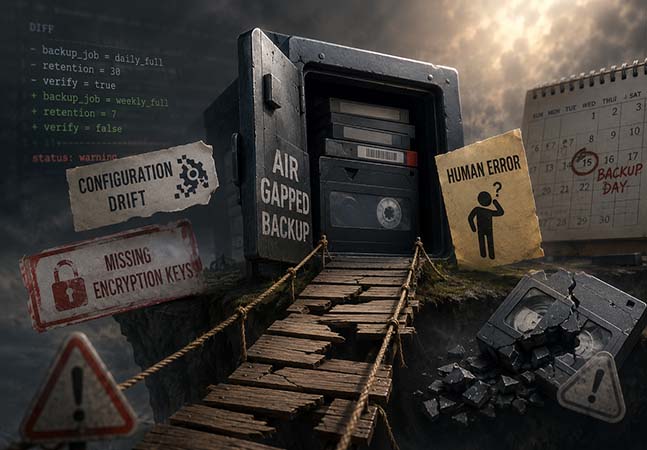
Air gapped backups can still fail when configuration drift, lost encryption keys and routine human mistakes go unnoticed until recovery is needed.

Air gapped backups can provide critical ransomware resilience, but restore testing gaps, documentation drift and media rotation mistakes can leave organizations unsure whether they can actually recover.

Building a modern PC to read decades-old floppy disks turns into a quirky retrocomputing challenge with uncertain odds.

Forced Microsoft 365 restarts can keep Office apps current, but they can also disrupt work and put unsaved data at risk.

Letting data pile up may feel safer than deleting it, but unchecked accumulation can make backups slower, costlier and harder to recover when something goes wrong.

Brien Posey explains how to convert an expired Windows Server evaluation VM into a production server using DISM and proper license activation steps.